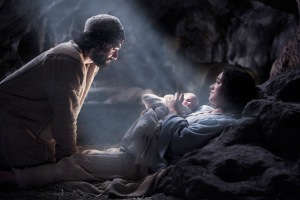
A song for morning worship that we sang in church yesterday. “I rest my weary soul in thee…”

In this three part series by Dr. Paul M. Elliott, we learn specific details of our new life as adopted sons of God.

Part 1 ~ What does it mean to be adopted by God? 

“Adoption is a legal act of God on our behalf, in the same way as justification. Justification is legal language in Scripture. We stand before the judgment bar of God as hopeless sinners, condemned to death, with nothing to offer for our own redemption. But Christ comes and stands before His Father at the judgment bar, and offers His perfect righteousness – His full atonement for our sins and His perfect keeping of God’s law – as our substitute. And so God the Father declares us not guilty. “

Read the full article here.

Part 2 ~ New Privileges, New Relationships, New Responsibilities.

“ Because of what Christ has done, God the condemning Judge is now God our loving Father. [...]  …[B]ecause of adoption we have a new relationship with God the Son. Not only is He our Savior, the One who paid for our justification, but He is now also our Brother.  [...] The Holy Spirit indwells every believer. He comes and brings us to spiritual life by the work of calling us and regenerating us, and He takes up residence within us.”

Read the full article here.

Part 3 ~ New Citizenship, New Bodies, A Secure Inheritance.

“The father’s property was his by right of adoption. And that is true for us. We have an inheritance. Our inheritance is our Father’s property — all the riches that are in Christ Jesus. The spiritual riches of life in Him now, and the riches of the new heavens and new earth in the life to come. “

Read the full article here.

*****************************************

Dr. Paul M. Elliott is founder and president of Teaching The Word Ministries.

~J.A. James, “The Duties of Parents” 1828

On parents it depends in a great measure, what their children are to be . . .
happy–or miserable in themselves,
a comfort–or a curse to their relationships,
an ornament–or a deformity to society,
a seraph–or a fiend in eternity!

It is indeed a fearsome thing to be a parent, and is enough to awaken the anxious, trembling inquiry in every parent’s heart: “Lord, who is sufficient for these things?” 

graceless parent is a most dreadful character! Oh! to see the father and mother of an expanding family, with a crowd of young immortals growing up around them–and teaching worldliness to their offspring, and leading them to perdition by the power of their own example!

A sheep leading her lambs into a den of hungry tigers, would be a shocking sight! But to see parents conducting their children to the bottomless pit–is most horrible!!

HT: Grace Gems

(Theodore Cuyler)

“As your days–so shall your strength be.”
Deuteronomy 33:25

Sufficient to each day are the duties to be
done–and the trials to be endured. God never
built a Christian strong enough to carry today’s
duties and tomorrow’s anxieties piled on the
top of them!

“Therefore do not worry about tomorrow,
for tomorrow will worry about itself. Each
day has enough trouble of its own.”
Matthew 6:34

HT: Grace Gems

Rooster Puzzle

A little silver-haired lady calls her neighbor and says, “Please come over here and help me. I have a killer jigsaw puzzle, and I can’t figure out how to get started.”

Her neighbor asks, “What is it supposed to be when it’s finished?”

The little silver haired lady says, “According to the picture on the box, it’s a rooster.”

Her neighbor decides to go over and help with the puzzle.

She lets him in and shows him where she has the puzzle spread all over the table.

He studies the pieces for a moment, then looks at the box, then turns to her and says, “First of all, no matter what we do, we’re not going to be able to assemble these pieces into anything resembling a rooster.”

He takes her hand and says, “Secondly, I want you to relax. Let’s have a nice cup of tea, and then,” he said with a deep sigh …

“Let’s put all the Corn Flakes back in the box.”

=]

HT: Midwestoutreach.org

1. The Spirit awakens a person’s heart.

2. The Spirit teaches a person’s mind.

3. The Spirit leads to the Word.

4. The Spirit convinces of sin.

5. The Spirit draws to Christ.

6. The Spirit sanctifies.

7. The Spirit makes a person spiritually minded.

8. The Spirit produces inward conflict.

9. The Spirit makes a person love the brethren.

10. The Spirit teaches a person to pray.

These are the great marks of the Holy Spirit’s presence. Put the question to your conscience and ask: Has the Spirit done anything of this kind for your soul?

~ J.C. Ryle

HT: JC Ryles Quotes

Indelible impressions!

(William Bacon Stevens, “Parental Responsibility“)

We aid and abet the spiritual death of our children, by our irreligious example–both in doing that which is positively wrong, and in neglecting to do what is as positively required. As young as our child is–it has learned to join together precept and practice. And if we are professors of religion, our child has put along side of this profession–our daily walk and conversation, and is perpetually drawing inferences from the one to the other, either for, or against, the truth which we profess.

Uncurbed tempers, ill-governed passions;
unbridled tongues, uncharitable words;
lack of meekness, and gentleness, and truth;
lack of sobriety of mind, and kindliness of heart;
the absence of that strict conscientiousness which should mark all our actions;
neglect of the Bible and of prayer;
disregard of the means of grace;
irrepressible worldliness, in ever dwelling upon “What shall we eat, and what shall we drink, and with what shall we be clothed?”
–are leaving indelible impressions upon the minds of our offspring! So that, copying our habits of thought, speech, and action–our child’scharacter in its essential characteristics, may be formed for eternity; before its mind is able to receive the precepts which perhaps we occasionally teach.

~Grace Gems

Meditating on the glorious truths in this song, especially the stanza that says, ‘When through grace in Christ our trust is, justice smiles and asks no more.’

The Kingdom Program in Daniel 2

Michael J. VlachBy Dr. Michael J. Vlach 
Theological Studies 

Daniel’s ministry took place in the context of Israel’s captivity to Babylon. Daniel 2 tells of a coming kingdom of God that will suddenly and decisively crush and replace the reigning Gentile kingdoms. As such it is an important section of Scripture for understanding the timing and nature of God’s kingdom.

Not long after King Nebuchadnezzar of Babylon ascended the throne, he had a recurring dream that disturbed him greatly (2:1). Sensing the magnitude of his dream, the king summoned his wise men with an incredible demand. They were to relate the king’s dream without being told of its contents and then interpret its meaning. Failure to do these things meant execution. They pleaded their case to the king, claiming the unfairness of such a request, but to no avail. On the verge of execution Daniel, who was also under the sentence of death, asked for time to beseech the Lord for the dream and its contents (2:18). “The mystery was revealed to Daniel in a night vision” (2:19) and after giving thanks to God Daniel gained access to the king to relate the dream and interpret its contents.

Daniel told Nebuchadnezzar that his dream concerned “what will take place in the latter days” (2:28) and “what would take place in the future” (2:29). In the king’s dream he saw “a single great statue…which was large and of extraordinary splendor” (2:31). This single statue was made of various parts:

  • Head of fine gold (2:32)
  • Breast and arms of silver (2:32)
  • Belly and thighs of bronze (2:32)
  • Legs of iron (2:33)
  • Feet partly of iron and partly of clay (2:33)

The king also saw a “stone” that “was cut out without hands” that struck the statue on its feet (2:34). The entire statue including the head of gold, the breast and arms of silver, the belly and thighs of bronze, the legs of iron and the feet of iron and clay “were crushed all at the same time” and became like “chaff” that was swept to the winds “so that not a trace of them was found” (2:35). The “stone” that struck the statue, however, “became a great mountain and filled the whole earth” (2:35).

Nebuchadnezzar's DreamDaniel then offered the interpretation of the great statue and the stone that destroyed the statue and grew into a great mountain. Concerning the head of gold Daniel told Nebuchadnezzar, “You are the head of gold” (2:38). Thus, the golden head represented Nebuchadnezzar and the kingdom of Babylon. Daniel does not explicitly say what the remaining three kingdoms of the statue represent but many scholars from the early church onward believed that the breast and arms of silver represented the kingdom of Medo-Persia which followed the Babylonian kingdom. It is also believed that the belly and thighs of bronze represented the kingdom of Greece and that the legs of iron referred to the kingdom of Rome (2:39–40). Rome was the most powerful and dominating kingdom of ancient times and is well described by iron. The feet of iron and clay indicate a kingdom related to the fourth iron kingdom of Rome, but this form of the kingdom in a latter state is not as stable since it has the element of “clay” associated with it. Daniel says this kingdom is “divided” and while strong also has a “brittle” element to it (2:41–42). Thus, this fourth kingdom begins as a very strong iron kingdom but then becomes less strong.

The “stone” that “was cut out without hands” is undoubtedly God’s kingdom that is without human origin. The stone that strikes the feet of the statue then becomes “a great mountain that fills the whole earth.” “Mountain” in this context is a symbol of a kingdom. Verses 44–45 state what this kingdom will do to the previous kingdoms:

In the days of those kings the God of heaven will set up a kingdom which will never be destroyed, and that kingdom will not be left for another people; it will crush and put an end to all these kingdoms, but it will itself endure forever. Inasmuch as you saw that a stone was cut out of the mountain without hands and that it crushed the iron, the bronze, the clay, the silver and the gold, the great God has made known to the king what will take place in the future; so the dream is true and its interpretation is trustworthy.

“In the days of those kings” is probably a reference back to the ten “toes” of the feet mentioned in verse 42. Thus, during the days of the final form of the fourth kingdom (Rome), the kingdom of God will “crush and put an end to all these kingdoms” and “will itself endure forever.”

Daniel 2, therefore, teaches five kingdoms with the fifth and final kingdom crushing the others:

  1. Babylon (head of Gold)
  2. Medo-Persia (breast and arms of silver)
  3. Greece (belly and thighs of bronze)
  4. Rome (legs of iron) and later form of Roman empire (feet mixed with iron and clay)
  5. God’s kingdom (a stone cut out without hands that becomes a great mountain)

The main point of Daniel 2 is that starting with Babylon there would be four major Gentile powers that would rule over the world and Israel, but a day is coming when God’s kingdom will suddenly crush these kingdoms and itself will be established as a geo-political entity over the entire earth forever.

Note that when God’s kingdom comes it dramatically and decisively destroys and replaces the existing four Gentile powers that preceded it. It does not co-exist as a spiritual kingdom alongside these literal kingdoms. As McClain states,

“Now it is deeply significant that in these visions the heavenly Kingdom comes down and destroys and supplants existing political powers” [1]

At one moment a stone from heaven shatters the Gentile kingdoms leading to the establishment of God’s kingdom on earth. There is no gradual development of God’s kingdom. It comes suddenly and decisively.

Debate has occurred as to whether this kingdom of God is a spiritual or earthly kingdom. This kingdom of God is spiritual in that it comes from heaven. But when this kingdom of God comes, it invades earth and takes over the realm in which the other four kingdoms ruled. Thus, it is an earthly kingdom as well in that it presides on the earth. The kingdom of God will be spiritual in origin but earthly in regard to the sphere of its existence and domain.

This earthly aspect of God’s kingdom is evident in a connecting point between the fourth kingdom (Rome) and the fifth kingdom (God’s kingdom). The fourth kingdom (Rome) “shatters all things” and “breaks in pieces” its enemies (2:40). Likewise, the fifth kingdom, God’s kingdom, “will crush and put an end to all these kingdoms” (2:44). There is a parallel here—just as the fourth kingdom of Rome crushed all rival political kingdoms on earth, so too the kingdom of God will crush the earthly political kingdoms on the scene when it comes. The coming of God’s kingdom is not progressively taking place over time; it is sudden. This is a stone that violently brings an end to the kingdoms that preceded it. The kingdoms that use to exist are like “chaff” that is swept away by strong winds.

Like the previous four kingdoms, God’s coming kingdom is a real geographical and political kingdom that will exist over the entire earth. It radically replaces the Gentile kingdoms that came before it. In reference to Daniel 2, Blaising states,

“This kingdom is not simply a higher order of spiritual reality that coexists with the present course of affairs, but it is a complete replacement of present conditions on earth with a new worldwide and multinational world order” [2]

Some have argued that God’s kingdom is the church, but this understanding is unlikely. According to Daniel 2:44–45, when God’s kingdom is established it crushes and puts an end to the prevailing Gentile powers of the day who are swept away like chaff with no remnants remaining. This did not happen when the church began. The Roman Empire continued for centuries after the church started. There is no evidence that the leaders of the Roman Empire or anyone else believed their kingdom had been replaced by the Christian church. That would have been news to them. Instead, the kingdom of God of Daniel 2 replaces the fourth kingdom when it comes; it does not exist alongside in a spiritual sense. Plus, just as the four previous kingdoms were tangible geo-political entities, so too will God’s kingdom be a geo-political entity. While the church has a mission to the nations, it is not a geo-political group like Babylon, Medo-Persia, Greece, or Rome. The coming Christian church simply is not the fifth kingdom of Nebuchadnezzar’s dream statue.

The concept of reigning over the earth is an important one in Scripture. In the creation account God created man to rule and subdue the earth (Gen 1:26–28). While God had established a kingdom on earth with Israel (see 1 and 2 Samuel), a nation that was supposed to show God’s glory to the other kingdoms of the world, Israel failed its mission and was judged and dispersed to the Gentile nations who would now rule over Israel. God’s kingly authority over the earth would be given to Babylon and then to the kingdoms of Medo-Persia, Greece, Rome, and then a weaker but revived Roman Empire. But after this time period of Gentile domination or what Jesus called “the times of the Gentiles” (Luke 21:24) God’s kingdom will be established over the entire earth and Israel will be restored. In sum, King Nebuchadnezzar’s dream involved the broad panorama of human history from his day through the kingdom of Israel’s Messiah.

Endnotes


[1] Alva McClain, The Greatness of the Kingdom, 153.
[2] Craig A. Blaising, “Premillennialism,” in Three Views on the Millennium and Beyond, 193.

“Without holiness, no man shall see the Lord!” 
Hebrews 12:14

Are we holy? Shall we see the Lord?

In this hurrying, bustling world–let us stand still for a few minutes and consider the matter of holiness. It is a solemn thing to hear the Word of God saying, “Without holiness, no man shall see the Lord!”

A man may go great lengths in religion–and yet never reach true holiness.

What is true practical holiness?
It is not knowledge–Balaam had that.
It is not great profession–Judas Iscariot had that.
It is not doing many things–Herod had that.
It is not zeal for certain matters in religion–Jehu had that.
It is not morality and outward respectability of conduct–the rich young ruler had that.
It is not taking pleasure in hearing preachers–the Jews in Ezekiel’s time had that.
It is not keeping company with godly people–Joab and Gehazi and Demas had that.

Yet none of these were holy people! These things alone, are not holiness. A man may have any one of them–and yet never see the Lord!

Let me try to draw a picture of Biblical holiness, that we may see it clearly before the eyes of our minds.

1. Holiness is the habit of being of one mind with God, according as we find His mind described in Scripture.

2. A holy man will endeavor to shun every known sin, and to keep every known commandment.

3. A holy man will strive to be like our Lord Jesus Christ.

4. A holy man will follow after meekness, patience, gentleness, patience, kind tempers, and government of his tongue.

5. A holy man will follow after temperance and self-denial.

6. A holy man will follow after love and brotherly kindness.

7. A holy man will follow after a spirit of mercy and benevolence towards others.

8. A holy man will follow after purity of heart.

9. A holy man will follow after the fear of God.

10. A holy man will follow after humility.

11. A holy man will follow after faithfulness in all the duties and relations in life.

12. Last–but not least, a holy man will follow after spiritual-mindedness. 

~J.C. Ryle, ”Holiness, Its Nature, Hindrances, Difficulties, and Roots

HT: Grace Gems


Follow

Get every new post delivered to your Inbox.